

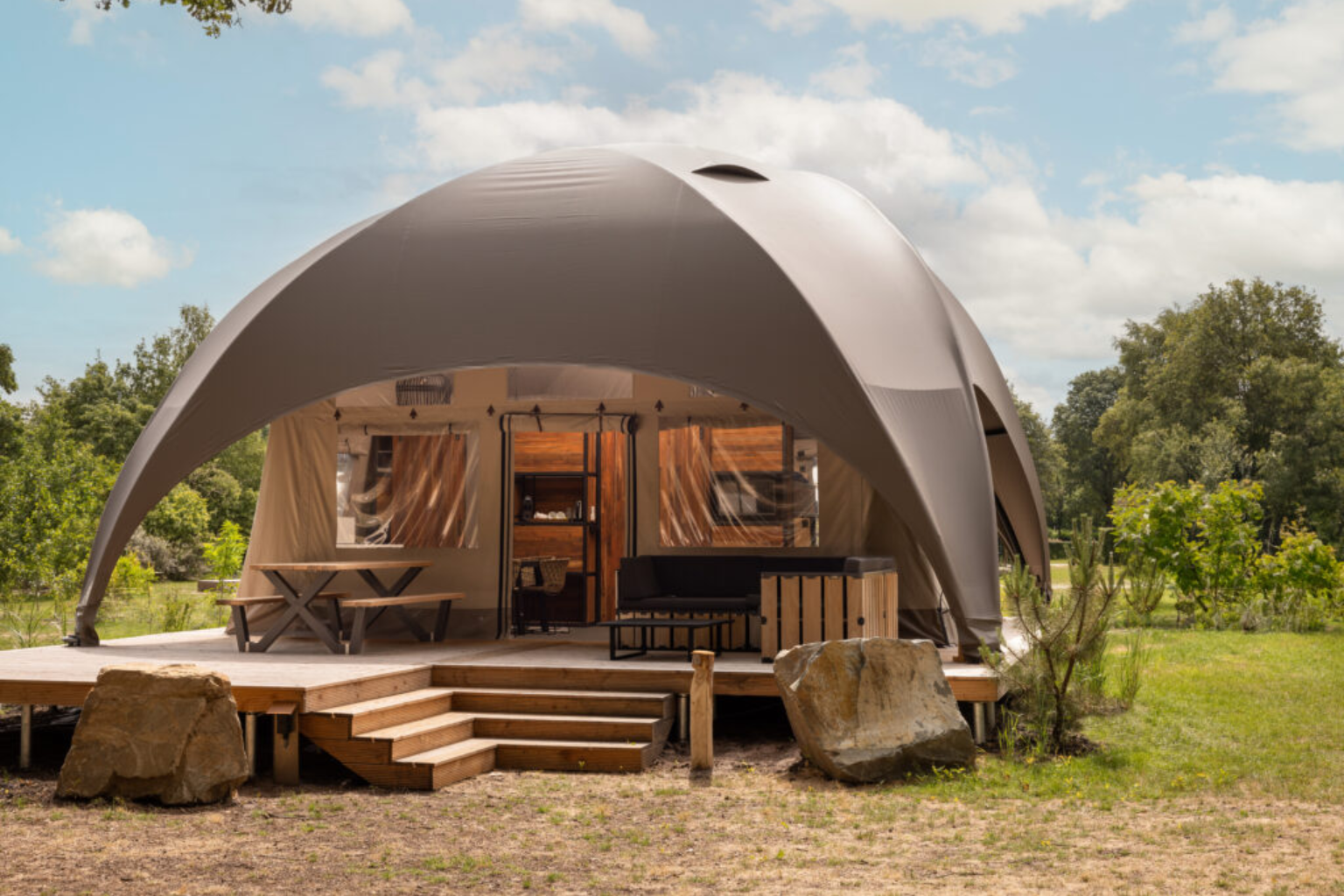
When companies need additional covered space quickly, traditional construction often feels like the only truly viable option. Yet many organizations in logistics, manufacturing, and events solve capacity issues with semi-permanent tent structures designed for long-term use. The goal is to strike a balance between speed, safety, and flexibility, without being tied to a multi-year construction project.
If you’re considering a long-term expansion with a canopy, it helps to explore what a modern permanent tent can offer, such as modular layouts, configurable access, and options that align with industrial processes.
What semi-permanent means in practice
A semi-permanent tent structure is intended to remain in place for months to years, while installation is typically faster and modifications are easier than with a conventional building. This is not the same as a lightweight party tent. These are usually structures with an engineered frame, durable membranes or panels, and flexibly configurable access points.
Teams often choose semi-permanent structures for:
– Rapid capacity expansion during peak demand or new contracts
– Less disruption on-site than with heavy construction activities
– Modular growth when you want to add extra bays, doors, or loading zones later
– The ability to relocate if the site layout changes
Common Applications Across Various Industries
Semi-permanent structures address specific challenges in a wide range of industries.
Logistics and storage
Warehouses often need additional covered space for overflow, cross-docking, or seasonal peaks. A semi-permanent storage tent can be placed close to existing docks, reducing internal transport time and keeping goods protected.
Production and support
In production environments, covered structures are used for staging, assembly support, packaging, or protecting weather-sensitive materials. With the right configuration, you can add features such as lighting, ventilation, and access control, tailored to operational requirements.
Events and venues
Venues use long-term tent structures for seasonal expansions, hospitality areas, or programs that run for several months. The footprint can be scaled up or down between seasons, which helps when demand is not constant.
Quick checklist for choosing the right structure
Agree on the selection criteria internally before requesting quotes. This prevents scope creep and helps suppliers recommend a suitable configuration for your location.
1. Determine the schedule
2. Map out the workflow
3. Check location constraints
4. Define performance requirements
5. Plan access and logistics
6. Inquire about compliance and documentation
Why flexibility is more important than you think
The biggest hidden costs in capacity projects aren’t always in the construction itself, but in the lack of adaptability when processes change. Semi-permanent solutions are often chosen because they can be expanded, reconfigured, or relocated with less downtime than a permanent building.
For procurement and facilities teams, that flexibility also supports more realistic budgeting. You scale the space according to actual needs, rather than building too large from the start.
Semi-permanent tent structures are a practical choice for organizations that need reliable covered space without the long lead times of traditional construction. By focusing on application, location requirements, and performance criteria, you can choose a solution that supports operations today and remains adaptable tomorrow.